
SELECTED WORK

A Southern Panther: Conversations with Malik Rahim · AK Press · 2025 · Book Chapter
Malik Rahim co-founded the Louisiana chapter of the Black Panther Party and spent decades campaigning to get Albert Woodfox, Herman Wallace and Robert King out of solitary confinement at Angola. Original interview reporting, published alongside conversations with Rahim himself.
Serviette, Issue 07: Food Is Ritual · November 2025
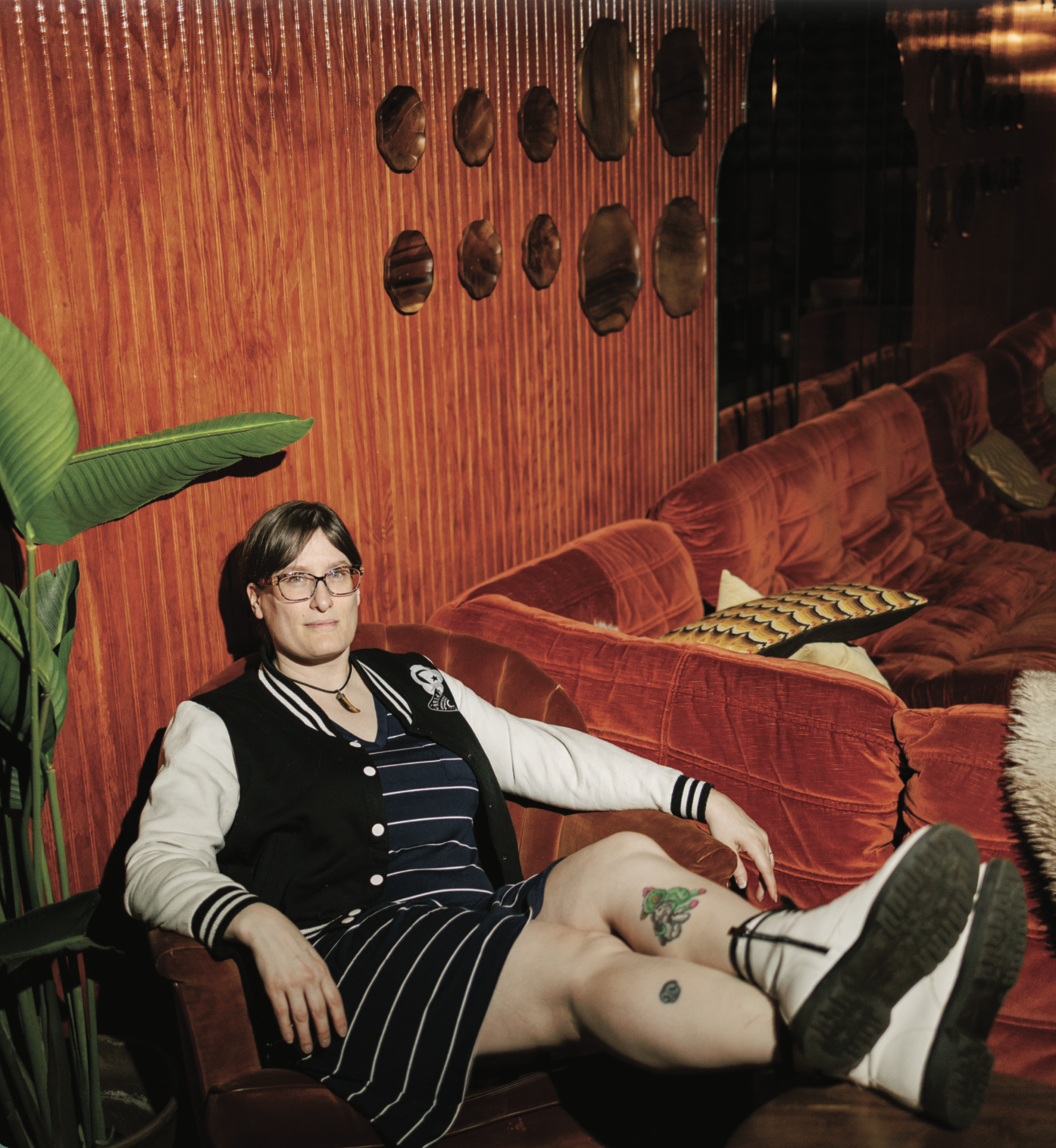
“You’ve got a penis in your cheese right here,” says Jennifer Billock, the world’s only professional tyromancer, pointing at my Humboldt Fog. Clients bring four cheeses — past, present, future, and a question — and she reads the veins and cracks like tea leaves.
Digest, Vol. 4 No. 4 · 2024
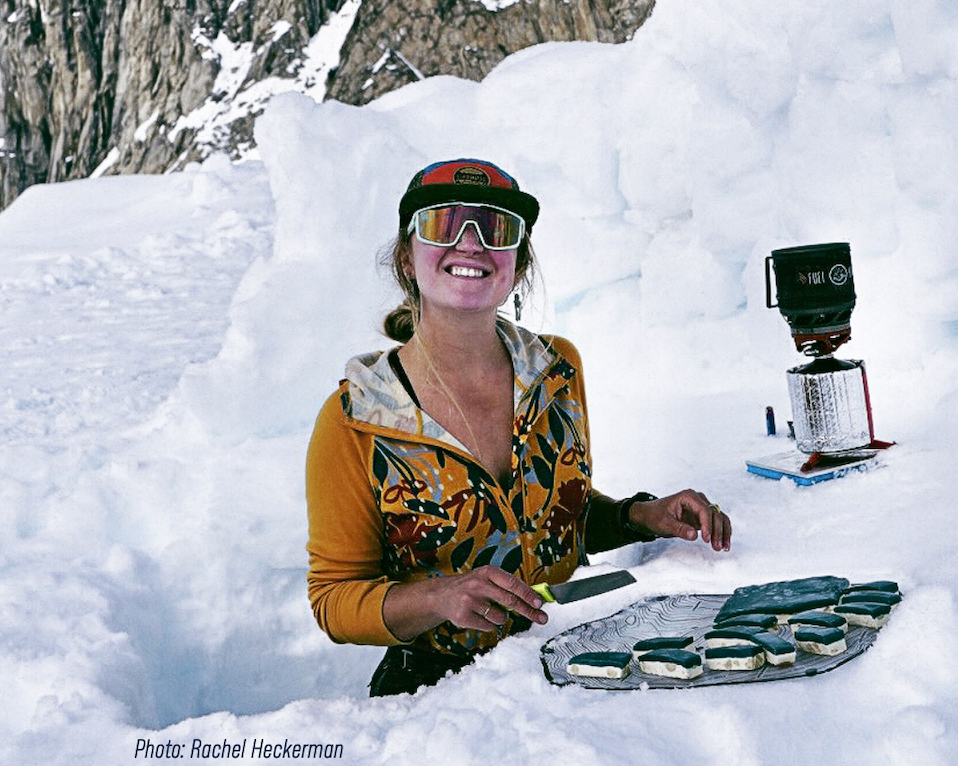
Rose McAdoo hiked to Denali base camp with three pounds of butter and a banner on her pack reading CAKE INSIDE. She carved a kitchen out of snow with her ice ax. When a storm stranded the camp, she cut cake with a snow saw and served it into climbers’ mugs, bowls, and gloved hands.
Serviette, Issue 05: Food is Place · November 2024
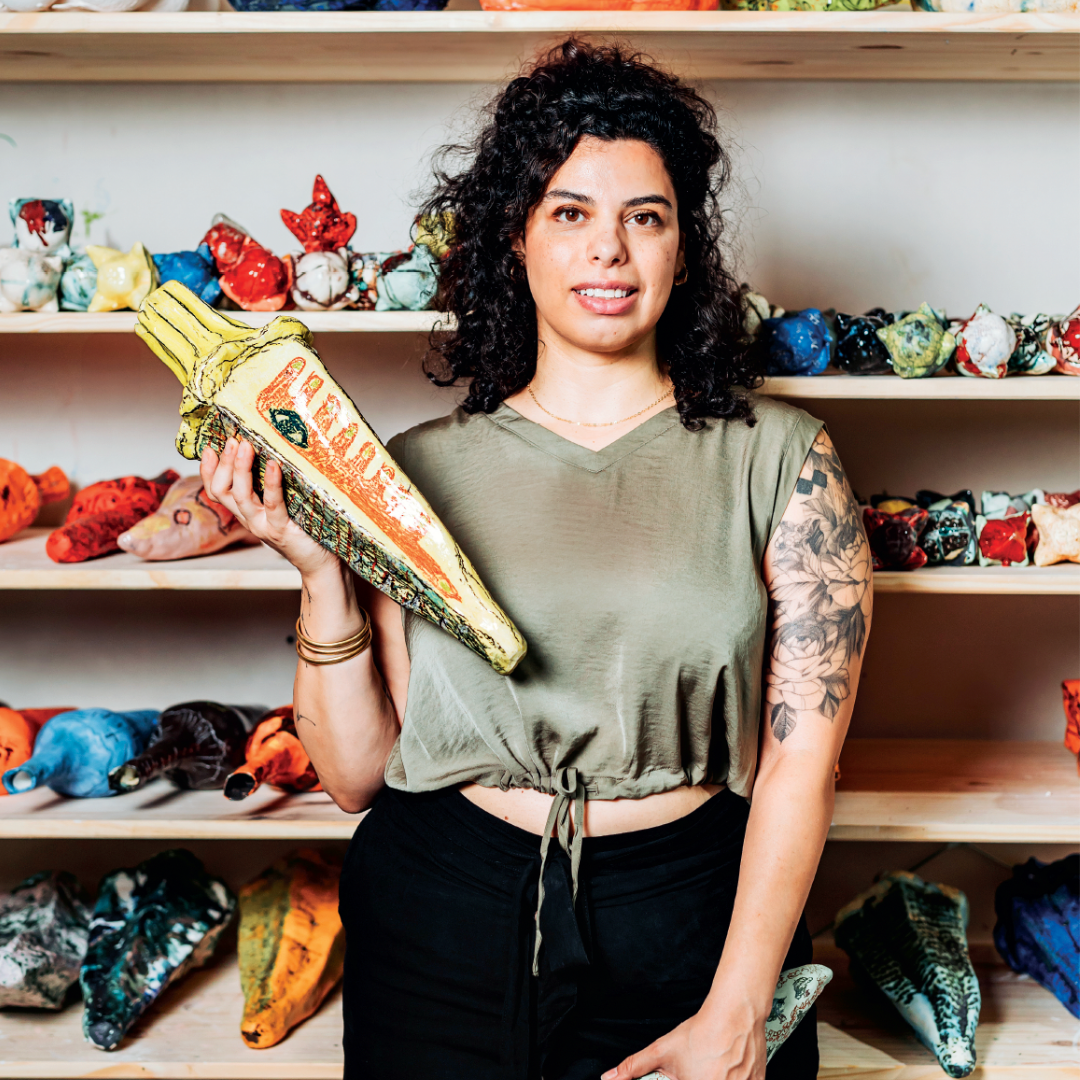
Fermentation takes a jar sitting on a countertop for at least a month. Mirna Bamieh left Ramallah a week into the war, emptying her jars and saying goodbye to her scoby. As she puts it: when you are uprooted, you can’t live your life around a jar.

Meat and Three, Episode 191 · May 2024 · Reporter, co-host, and lead producer
Angola was built on a sugar plantation and men still cut cane there. Robert King spent 29 years in solitary and learned to make pralines in his cell. Three years of reporting went into this one.
Signal Awards 2024 - Gold, Diversity, Equity & Inclusion; Bronze, History.
Davey Awards 2024 - Gold, Diversity, Equity & Inclusion.

KCRW, Good Food · August 2024 · Reporter
A beloved Southern candy reveals a deeper story of slavery, incarceration, and resistance through the life of activist Robert King.

Meat and Three, Episode 200 · August 2024 · Reporter
Zach Ben is a sixth-generation Navajo farmer. He and his wife Mary didn’t want their son’s first solid food to come from a jar, so they dedicated a farming season to him and fed him corn from their own steam pit. Bidii Baby Foods grew out of that meal.

Meat and Three, Episode 195 · June 2024 · Reporter
Tyromancy is divination by cheese. Jennifer Billock read my past in a Gouda and my future in goat cheese, which fell apart in her hands as she was cutting it. That, she explained, indicated a bad decision coming.

Meat and Three, Episode 197 · July 2024 · Reporter and lead producer
Salt-rising bread is leavened by Clostridium, a bacterium otherwise associated with wounds and food poisoning. People describe the smell as somewhere between feet and diapers. It takes days to make, which is why it’s disappearing. A small number of bakers make it anyway.

Meat and Three, Episode 198 · July 2024 · Reporter
In the 1970s, feminist activists stopped asking for a seat at the table and built their own restaurants. Bread and Roses opened in Cambridge in 1974 as a place for women and their friends, with weekly speakers, performances, and art on the walls. Andrea Dworkin read there and Margaret Mead dropped in to see what it was.

Meat and Three, Episode 196 · June 2024 · Reporter
Our team ventured into the heart of Times Square, navigating the chaos to a promised land of escapism and tropical delights – Margaritaville. This story celebrates the commitment, camp, and ingenuity that define Margaritaville, challenging conventional ideas of what it means to be authentic.

Meat and Three, Episode 194 · June 2024 · Reporter
Cocktail history is largely the story of men behind bars. Nicola Nice has spent years finding the books women wrote about alcohol. Book by book, she’s pieced together the forgotten role of women in American drinking.

Narratively · September 2020
At a munching party in 1907, guests chewed each mouthful of food for five minutes while a conductor timed them with a stopwatch and rang a gong. The Detroit Free Press found the evenings notably less vivacious than dinners used to be. Upton Sinclair and Kafka were converts.

Atlas Obscura · November 2019
Three years after a famine that killed millions, the Kremlin decided the country’s real shortage was champagne. A winemaker replaced bottle-aging with pressurized tanks, cutting three years to a month. The bottles were advertised on the vans that carried prisoners to the Gulag.

Atlas Obscura · November 2019
Mao regifted a crate of mangoes from Pakistan’s foreign minister because he didn’t like messy fruit. Workers who had never seen one sat up all night stroking and sniffing them. Within a year a man was executed for comparing the fruit to a sweet potato.

Atlas Obscura · June 2018
A woman dining alone in the 19th century was assumed to be a prostitute. Ice cream saloons got around it with parlor furnishings, which is where the name comes from. They were also one of the few places a couple could meet unchaperoned, and moralists warned of ice cream drugged with passion-exciting vanilla.

Atlas Obscura · January 2021
David Maxwell trained as a Mayanist and became the world’s only scholar of beer can archeology, with 4,500 catalogued by country and brand. His 1993 guide to dating cans by design change is now standard practice, and the most-read thing he has published.

Hyphen Magazine · September 2020
Abusers had a new tool in 2020: the racial climate itself. Counselors described partners telling Asian American women that shelters were refusing Asians, that they would be left to die alone if they coughed. One organization’s hotline volume tripled between March and May.

Lady Science · July 2020
Orosa was the first person to can and freeze mangoes, made vinegar from pineapples, and invented banana ketchup. During the occupation she smuggled rations into an internment camp inside hollowed bamboo. Her recipes are still on shelves. Her name came off them.
Cited by the New York Times and the National Park Service; featured in Appetite for Freedom.

Atlas Obscura · October 2019
Jasper McCarthy pulled his first pint at ten and buried his first body at thirteen. The Famine forced the arrangement: an 1846 statute sent bodies to the nearest public house, and beer cellars were the only cold storage in town. The law stood until 1962.

Smithsonian Magazine · April 2019
Gold Rush San Francisco paid a dollar an egg, so men rowed 26 miles to a seabird colony and scaled cliffs in crampons made of rope and rusted nails. It ended in a dawn gunfight in 1863, two dead, and a murre population cut from 400,000 to 60,000.

Atlas Obscura · December 2018
Gilmore’s network of Black women raised $125 to $200 a week to fund the carpool for 381 days during the Montgomery bus boycott. Most of them worked in white households and couldn’t be seen organizing, so only Gilmore knew who was cooking. Martin Luther King Jr. financed the restaurant she later opened in her dining room, where he held meetings over fried fish and butter beans. She called him “heifer.” He called her “Tiny.”

Atlas Obscura · September 2018
On one day a year, millions of women line the streets of the capital of Kerala, build brick hearths on the pavements, light them together at one signal, and prepare porridge for the goddess. It’s the largest gathering of women on earth, and for a day the city belongs to them.
Featured in Gastro Obscura: A Food Adventurer’s Guide.